
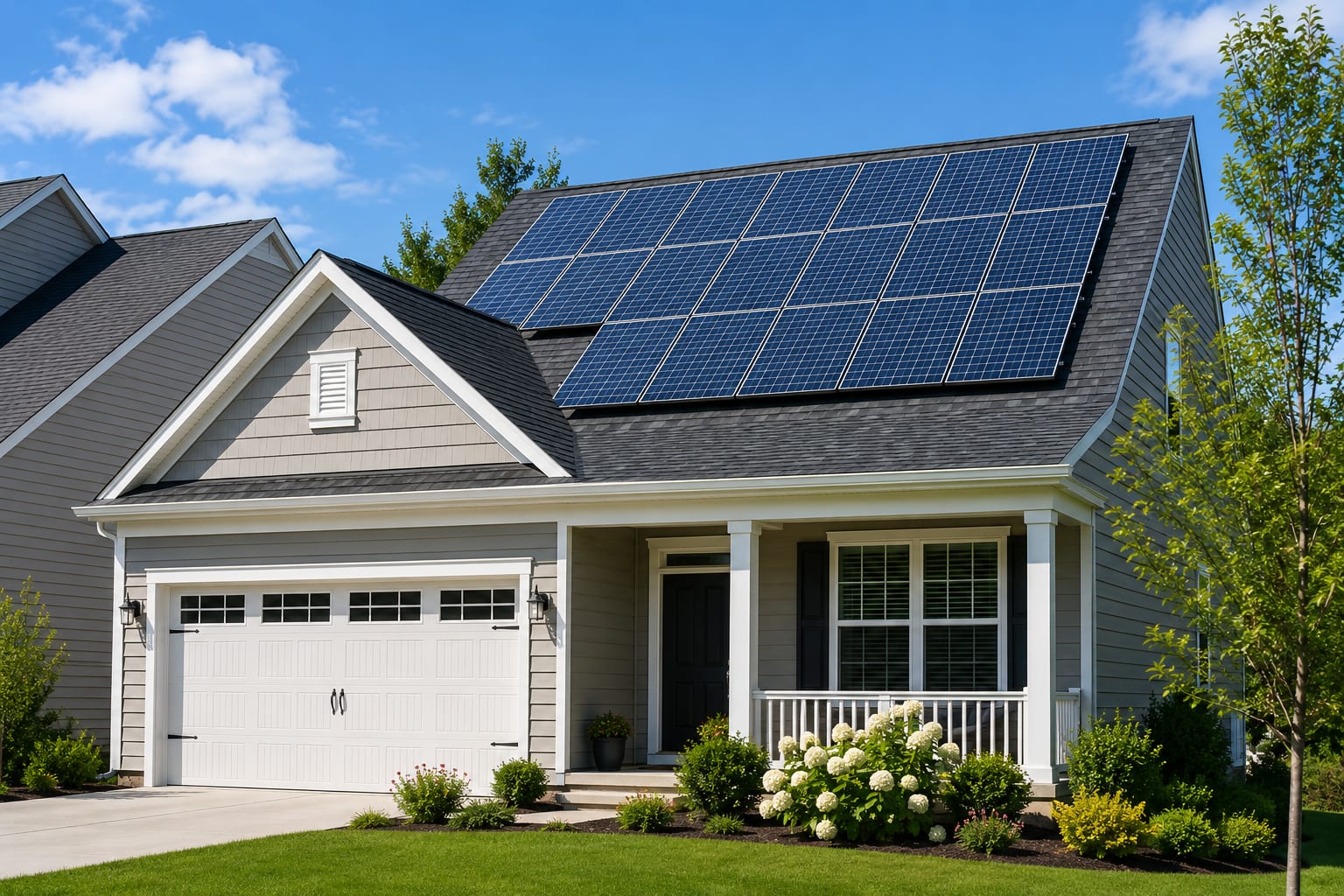

The pitch sounds like a financial no-brainer. A clean-cut salesperson knocks on your door or pops up in your social media feed with a dazzling promise: “Stop paying the electric company, generate your own clean energy, and instantly skyrocket your home equity for $0 down!”
It sounds like a win-win for both your wallet and the planet, right? But as residential solar installations have surged over the last couple decades, a quiet reality has caught up with the hype. And, as it applies to the world of real estate, solar panels are turning out to be far more complicated than the sales brochures suggest.
Whether you are a current homeowner thinking about going solar, or a buyer eyeing a house with panels already on the roof, you should understand the structural, financial, and legal friction points that happen behind the scenes.
Here is what you need to know before you sign on the dotted line:
The Financial Crossroads: When Is Solar Actually a Good Idea?
I want to be very clear up front: Solar panels are not inherently a bad investment, but they are highly situational. They are a long-term lifestyle choice, not a quick financial hack.
When Solar Makes Sense:
- High Local Utility Rates: If you live in an area with notoriously expensive electricity, generating your own power moves the needle faster.
- Perfect Roof Conditions: Your roof faces south or west, has zero tree canopy shade, and is in pristine structural condition.
- The Long-Game Strategy: You plan on staying in your home for at least the next 8 to 12 years. This is the typical "payback period" required to break even on the upfront installation costs.
When Solar Is a Bad Investment:
- An Aging Roof: If your roof is more than 10–15 years old, installing solar panels on top of it is a logistical disaster waiting to happen (more on that below).
- Low Energy Consumption: If your monthly electric bill is already relatively low, the math simply doesn't work out. It will take you decades to recoup a $20,000 to $30,000 system.
- Short-Term Living Plans: If you think you might relocate for a job, upsizing, or downsizing within the next 5 years, you will almost certainly lose money on the investment.
The Real Estate Myth: Do Panels Really Add Value?
If a solar representative tells you that installing panels will instantly add dollar-for-dollar equity to your home, exercise extreme caution.
In the real estate market, value is determined by what a buyer is willing to pay, not by what a homeowner spent on an upgrade. The reality of solar value comes down to one massive distinction: Owned vs. Leased.
1. Owned Panels (The Minor Perk)
If you own the solar system outright - meaning it is fully paid off and free of debt - it can add modest value to your home. A buyer will view it as a nice bonus that will lower their monthly utility bills. However, it rarely raises the appraisal value by the total amount you paid to install it, and this is the important factor to consider.
2. Financed or Leased Panels (The Red Flag)
If the panels are leased, or if there is still a hefty financing note attached to them, they do not add value. Period. In fact, they are frequently viewed by buyers as a liability.
Instead of looking at a beautiful home, buyers see a secondary, decade-long monthly bill they are expected to take over. This can actively shrink your buyer pool, cause buyers to demand that you pay off the balance at closing, or prompt them to walk away from the deal entirely. More on this later.
The Hidden Maintenance and the $5,000 "Roof Trap"
Solar companies love to brag that panels require zero maintenance because they have no moving parts. While they are relatively durable, they are far from "set it and forget it."
General Upkeep
To maintain efficiency, panels must be kept clean. Pollen, dust, leaves, and bird droppings will degrade their power output over time, meaning you’ll need to routinely hose them down or hire a professional cleaning service. Additionally, the inverter - the crucial component that converts solar energy into usable electricity for your house - typically fails and requires replacement every 10 to 15 years, a cost that can run into the thousands.
What About Hail Storms?
Quality solar panels are built to withstand standard hail (typically up to 1-inch stones traveling at 50 mph). However, a severe, roof-shredding storm will shatter them.
If you own the panels, your standard homeowner’s insurance policy will usually cover the damage, provided you notified your insurance company and added the panels to your policy when they were installed (expect your monthly premium to bump up accordingly). If the panels are leased, the solar company’s insurance usually handles the replacement, but you may be left waiting in a long line for them to actually send a crew out.
The "Remove & Reinstall" (R&R) Nightmare
This is the single biggest hidden cost of residential solar, and you may not even think about it until circumstances require you to do so: What happens when your roof naturally reaches the end of its lifespan and needs to be replaced?
You cannot simply roof around solar panels. A certified solar technician must come out to safely shut down the system, detach all the panels, label the wiring, and store the equipment. Then, the roofers do their job. Finally, the solar crew must return to re-anchor and re-wire everything.
The Reality Check: In 2026, this "Remove & Reinstall" (R&R) process costs between $3,000 and $6,000 on average!
Here is the kicker: If you are replacing your roof due to normal wear and tear, homeowner's insurance will NOT cover this cost. That $5,000 bill to take the panels off and put them back on is entirely out-of-pocket for you, effectively doubling or tripling the financial friction of a standard home maintenance project.
Buying a House with Solar? Watch Out for the Paperwork
If you are a homebuyer looking at a property with solar panels, you need to act like a detective during the disclosure period. You must find out exactly how those panels are legally tied to the property. Obviously, your real estate agent can and should assist in this due diligence.
1. The Mortgage Qualification Hurdle
If the seller is financing the solar panels, they will likely expect you, the buyer, to assume the remaining balance of the loan.
This creates an immediate hurdle for your mortgage lender. To approve your home loan, the underwriter looks at your Debt-to-Income (DTI) ratio. If you have to take on a $150 to $200 monthly solar note alongside your new mortgage payment, that extra debt can skew your ratios. If your qualifications are tight, assuming a solar note can literally disqualify you from buying the house.
2. The UCC-1 Title Mess
When a homeowner finances solar panels, the solar company doesn't usually take out a mortgage lien against the house itself. Instead, they file what is called a UCC-1 Financing Statement.
A UCC-1 is a legal notice filed in the public records stating that the solar company has a financial interest in the equipment attached to the home. It protects the lender if the homeowner defaults.
When you go to buy the home, this UCC-1 filing will pop up during the title search. Because it clouds the property records, your mortgage company will often halt the closing process. They will refuse to fund your loan until one of two things happens:
1. The seller pays off the solar loan entirely at escrow using their home proceeds.
2. The solar company agrees to "subordinate" their claim, meaning they legally agree to step behind your mortgage lender in the priority line. Getting a solar company's legal department to execute a subordination agreement can take weeks, causing massive, stressful delays to your closing date.
Questions Every Buyer Must Ask Before Making an Offer:
Here are some questions we always ask when we have a buyer considering a home with installed solar panels:
- Are these panels completely owned, financed, or leased?
- Can I see the original contract and the last 12 months of actual electric bills to verify the real savings?
- What is the exact remaining balance on the loan, and what is the monthly payment?
- Will the solar company allow a lease/loan transfer, and what are their credit requirements for the buyer?
The Verdict
Solar panels aren't inherently bad, but they are a massive financial commitment masquerading as a simple utility upgrade.
If you are a homeowner, never sign a solar contract under high-pressure sales tactics. Talk to a trusted roofing contractor to inspect your roof first, and consult a real estate professional to understand how it might affect your neighborhood's resale value. Perhaps most important: consider how long you plan to live in the home (understanding that life happens and situations change) to make sure you're making a wise decision.
If you are a buyer, keep your eyes wide open. Don't let the allure of a "green home" blind you to the underlying debt, title issues, and maintenance traps that might be hiding right above your head. Always - always consult with your real estate agent to do due diligence regarding the specific home you're considering prior to writing an offer.
Thinking About Making a Move? Let’s Connect!
Whether you are trying to figure out how to market your home with existing solar panels, or you've found the perfect house but aren't sure how to handle its solar contract, you don't have to navigate the fine print alone. Real estate transactions are complicated enough without unexpected title delays or mortgage hurdles.
Are you planning to buy or sell a home soon? Let's chat! Reach out today, and we will make sure your next real estate move is seamless, protected, and entirely stress-free.